 1300 664 485
Volcanic adventures – where to see Australia’s extinct and dormant volcanoes
Believe it or not, Australia has volcanoes! In fact, the Australian mainland is dotted with hundreds of extinct volcanoes. These ancient structures are responsible for shaping some of Australia’s most spectacular scenery. The volcanic remnants leave their marks on our landscape in the forms of lush rainforests and the fertile soil that makes agriculture and farming such as staple of life in Australia. They also leave their marks in the landscape itself, as long-dormant volcanoes are responsible for natural phenomenon like mountain chains, sweeping plains and crater lakes.
Most of Australia’s volcanoes were located along the eastern seaboard from Northern Queensland to Tasmania. You can see the evidence of this volcanic past with plains, crater lakes and mountain chains. These tell the story of how lava once shaped our landscape. Thankfully the Australian mainland is no longer home to active volcanoes, with the only two known active volcanoes located on Herd and McDonald Islands in the sub-Antarctic, with the last known eruption by a volcano on the Australian mainland over 5,000 years ago in South Australia
You can visit sites that were formed by volcanic activity and wonder at how powerful the eruptions must have been to form wonders like the lava tubes, crater lakes and mountain ranges that were formed by out volcanic history.

Image: Cruisin’ 2 Berth Sandpiper
Queensland
Queensland is the first stop on our volcanic trip, with Brisbane being an amazing location to pick up your motorhome before hitting the road. From here you can head to some amazing volcanic locations including the Glass House Mountains and the Undara Volcanic National Park.
Undara Volcanic National Park
The Undara Volcanic National Park is home to one of the earth’s longest lava flows that originated from a single volcano. Around 190,000 years ago, a large volcanic eruption occurred, this eruption resulted in lava flowing down a dry riverbed resulting in the formation of the Undara Lava Tubes.
Lava tubes are formed when a large lava flow cools and hardens on the top while molten lava continues to flow underneath. After the eruption subsides the molten lava flows away leaving caverns and caves formed by the hardened top layer. The Undara Lava Tubes are one of the most notable instances of this phenomenon.
Access to the Undara Lava Tubes is only available through a commercially guided tour, however if you want to, you can explore the remainder of the National Park on the walking tracks that range from 2.5km to 12km return.
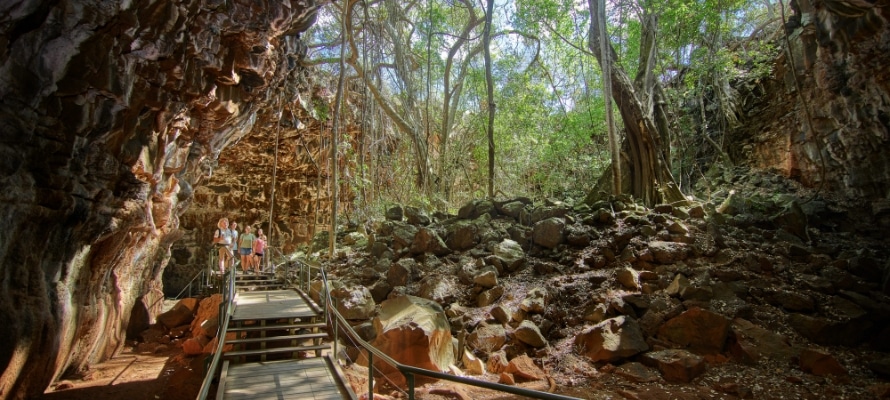
Image: Undara National Park – Tourism Queensland
Glass House Mountains
The Glass House Mountains are not actually mountains, or hills – they are 25-million-year-old volcanic plugs, formed by magma that has been long frozen in time. These eleven distinct peaks that predominate the Sunshine Coast Hinterland were once the throat of ancient volcanoes, with Mount Beerwah and Mount Coonowrin standing the tallest of the eleven.
Even though climbing these peaks is probably on your bucket list – Mount Tibrogaran and Mount Beerwah are spiritually significant sites to the Indigenous people of the area. Please respect this and do not climb the peaks. Instead, you can experience these amazing formations from nearby locations like the Wild Horse Mountain Lookout, the Glass House Mountains Lookout, and Mary Cairncross Scenic Reserve.
There are also numerous walks that are available, so why not drop by the Glass House Mountains Visitor and Interpretive Centre and find out which of the walks is best for you before heading out, especially as there is no knowledge better than the knowledge of a local.
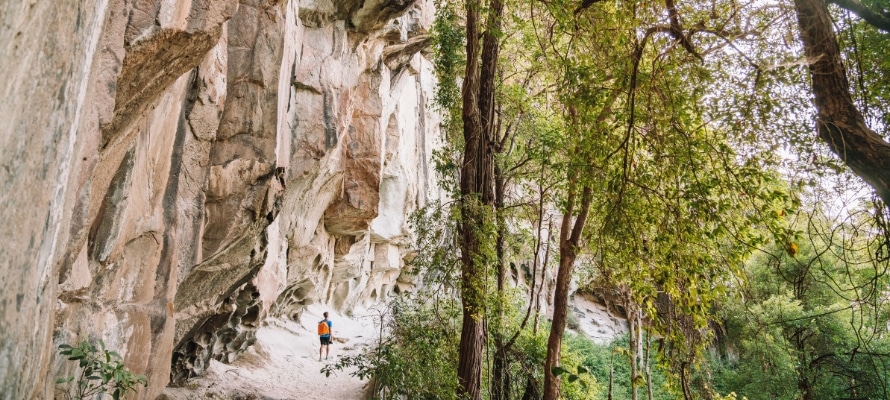
Image: Mount Beerwah – Tourism Queensland
New South Wales
New South Wales is also home to some amazing volcanic landscapes, you can visit the National Parks at Swan Rocks, Wollumbin and Barrington Tops to experience New South Wales’s volcanic history. If these volcanic structures are more your vibe you can pick up from our Sydney Branch.
Sawn Rocks
The Sawn Rocks located in the Mount Kaputar National Park are one of the most striking examples of the phenomenon known as “organ piping” where structures are forms where lava becomes trapped in a cooling pond and cools at a very slow rate, this cooling process then forms cracks that form the columns that give the organ pipe phenomenon their name. The Sawn Rocks are a striking reminder of the volcanic history of Mount Kaputar.
You can enjoy the short 15-minute walk along a shady track to the lookout that stands at the foot of Sawn Rocks. Tourism NSW recommends timing your trip to the lookout where you will reach your destination just after midday when the afternoon sun strikes directly on the cliff face.
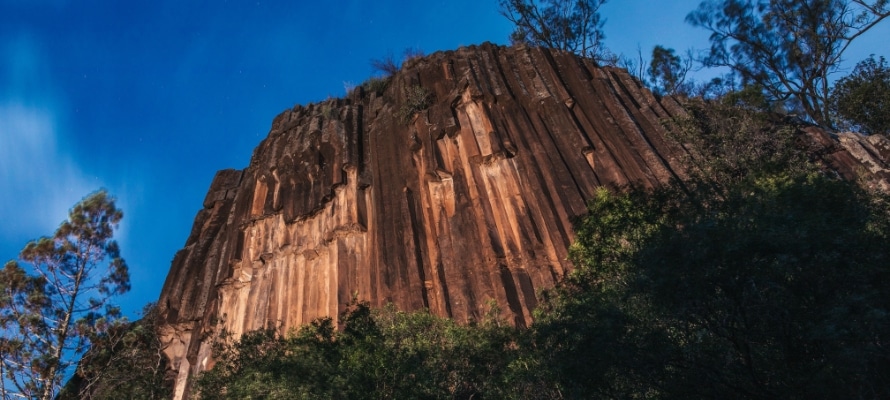
Image: Sawn Rocks – Tourism New South Wales
Wollumbin / Mount Warning
Wollumbin / Mount Warning is the remnant of a volcano that has been extinct for over 23 million years. The attached National Park is a great place for families to visit, where you can wander through the lush rainforest Lyrebird Track.
This is a place of cultural significance to the Aboriginal people of the area, particularly the Bundjalung Nation. This has led to the closure of the Summit Track, allowing the indigenous history and significance of the site to be preserved. The future of the summit track will be made by the indigenous custodians of the site, in the meantime please respect their wishes and not climb the summit track.
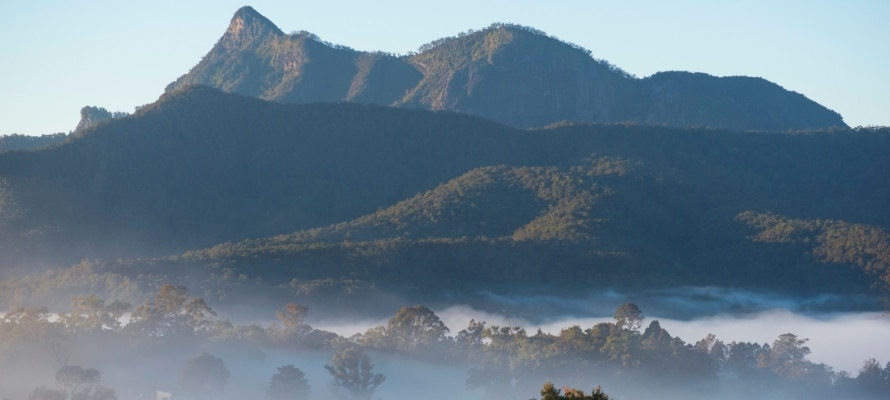
Image: Wollumbin/Mount Warning – Tourism New South Wales
Barrington Tops Plateau
Mount Barrington located on the Barrington Tops Plateau is an extinct shield volcano situated southwest of Muswellbrook that was active roughly 55-million years ago. The Barrington Tops National Park is part of the World Heritage Area Gondwana Rainforests, that was shaped by lava flows over millions of years.
The National Park is dotted with walking trails, and it has eight campgrounds available, with the Gloucester River and Polblue sites suitable for motorhomes. There is nothing quite like settling in for a night in a National Park. For those that want to enjoy the sights, the high altitude of the region offers a variety of lookouts, so research which ones you might want to visit and check the difficulty of the hike before setting out.
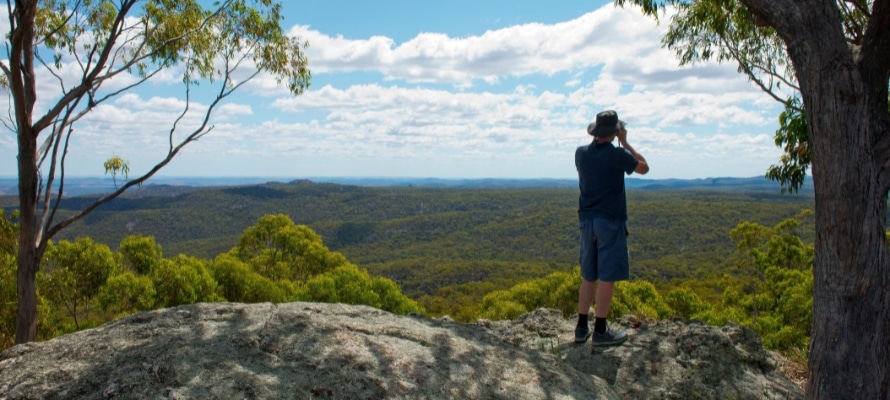
Image: Barrington Tops – Tourism New South Wales
Victoria
Victoria is home to some wonderful volcanic history, with the history considered young in geological terms. It forms one of the largest volcanic plains in the worlds, with over 400 eruption points. This region is considered geologically active, with eruptions occurring as recently as 5,000 years ago at sites like Mount Gambier, Mount Eccles and Mount Schank. Visiting Victoria’s volcanic plains will allow you to experience formations like scoria cones and crater lakes, and just a short drive from our Melbourne depot it is worth the visit.
Organ Pipes National Park
Here we have another example of the phenomenon known as organ pipes. This example of organ pipes lies around twenty kilometres North-West of the Melbourne CBD in the aptly names Organ Pipes National Park.
A short walk away from the Organ Pipes you can see the Rosetta Stone, a stone that looks like the spokes of a wheel which is estimated to be around four million years old. The Organ Pipes National Park is also a great spot to enjoy a picnic and a day out with plenty of picnic spots and walking tracks available.
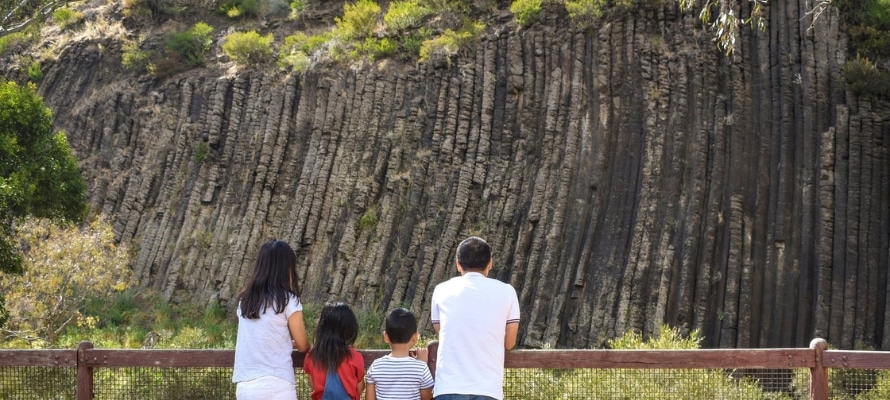
Image: The Organ Pipes – Tourism Victoria
Mount Napier
Mount Napier is the most recently active volcano in Victoria, last erupting approximately 32,000 to 36,000 years ago. Mount Napier has been considered dormant for over 5,000 years. The difference between an extinct volcano and a dormant volcano is that an extinct volcano is considered dead and will never erupt again, while a dormant volcano is considered sleeping (as it has not erupted in the last 10,000 years) but may one day erupt again.
If you take the walking track to the summit not only, will you be able to view impressive volcanic features on the trail, including a lava cone. You will be able to make it all the way to the scoria cone crater at the summit where you will be greeted with fantastic views over the Grampians all the way to the coast.
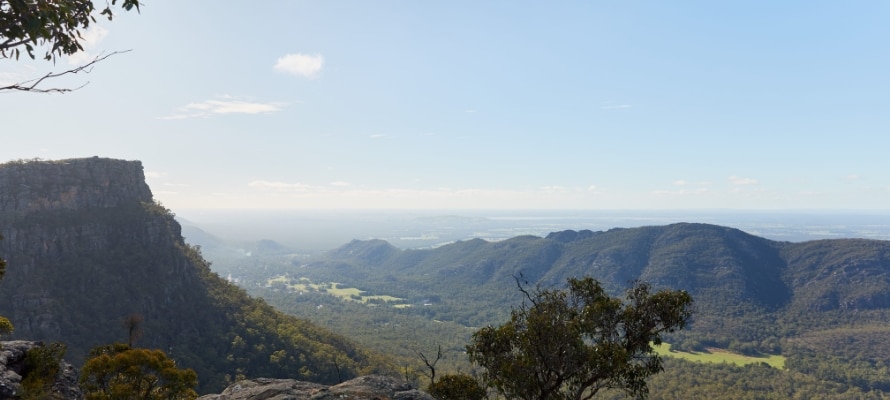
Image: Grampians Vista – Tourism Victoria
Tower Hill
Tower Hill is a dormant Marr volcano that was formed over 30,000 years ago by violent eruptions. The area is filled with scoria cones that are situated within a larger crater lake, formed by magma that reacted with existing groundwater.
These days the area is a thriving Wildlife Reserve, after rehabilitation efforts begin in the 1960s to repair the damage done by natural degradation and quarrying. The reserve had a thriving wildlife population including koalas, emus and kangaroos. With ample walking opportunities available for people of all abilities, including boardwalks and scenic climbs.
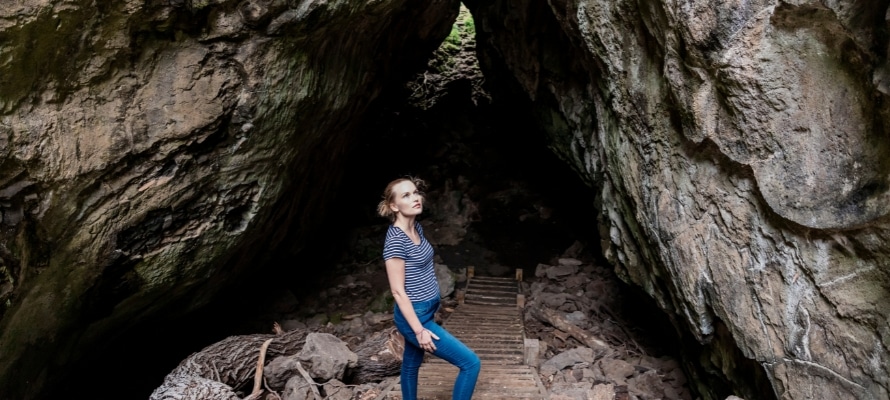
Image: Tower Hill – Tourism Victoria
Tasmania
Even the small island state of Tasmania has a volcanic history, with violent eruptions forming the Mount Read volcanic belt in the west. It is difficult to see this volcanic history as most of it occurred in undersea salicylic eruptions. However, there is one very notable volcanic site located in Stanley on the Tasmanian North-West Coast, which makes it a great addition to any road trip leaving from our head office in Hobart.
The Nut at Stanley
The Nut at Stanley is and 143-meter-high remnants of a long-extinct volcanic plug that was formed roughly 12.5 to 13 million-years-ago. This steep sided formation consists of hard solidified basaltic rock that filled a volcanic vent and resisted natural erosion while the softer surrounding edges wore away.
Visitors to Stanley can travel to the top of The Nut via a chairlift or walking track and walk around the plateau the is at the form of the structure. You can view short-tailed shearwaters nesting in the summer and at dusk little penguins march up the nearby beach to their burrows. You can watch this penguin parade from the viewing platform at Godfreys Beach.
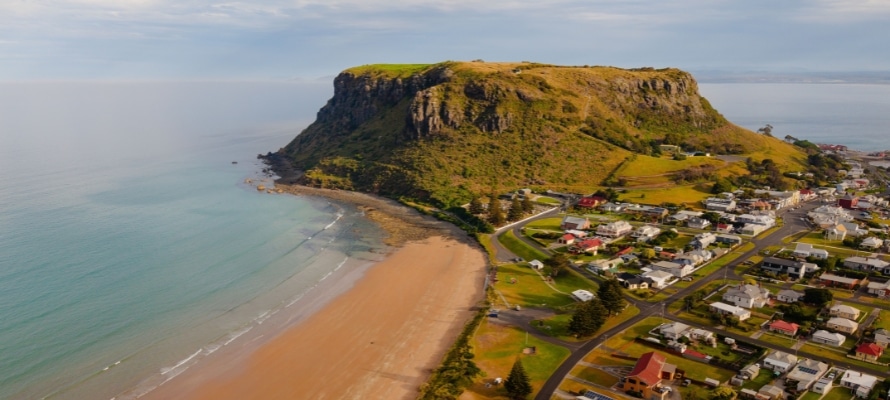
Image: The Nut at Stanley – Tourism Tasmania
South Australia
South Australia’s volcanic history is amongst the youngest on the Australian mainland, featuring the mainlands two youngest volcanoes, Mount Gambier and Mount Schank. These mountains erupted roughly 5,000 to 6,000 years ago. The volcanoes produced scoria cones and lava flows in the southeast region of the state. If you are planning on visiting these southern locals, then picking up a motorhome from our Melbourne depot is best, it just means you will get to enjoy more of a scenic drive until you reach your destination.
Mount Gambier
Mount Gambier is located on the Limestone Coast around 480km South of Adelaide. This combination Marr/Tuff volcano has been dormant for over 5,000 years. The Mount Gambier Volcanic Complex is a State Heritage Area and consists of a series of craters and other volcanic features on the edge of the city of Mount Gambier.
There are multiple lakes in the site that are recognised as Marr craters, formed by steam explosions. One of these sites is Blue Lake, which turns different shades of blue throughout the year. There is a 3.6km walking track around the circumference of the lake, allowing you to see all the depths of this magnificent site.
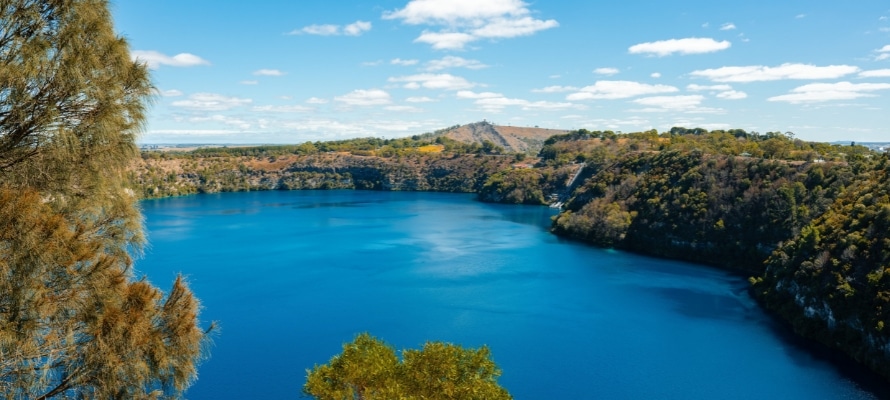
Image: Blue Lake – Tourism South Australia
Mount Schank
Only 12km South of Mount Gambier, Mount Schank is another newer volcanic formation, but it is older than Mount Gambier, even though like Mount Gambier it has been dormant for over 5,000 years. This well-preserved formation is also Heritage Listed, and consists of a scoria cone, twin craters and a popular walk around the rim that offers fantastic views all the way to Mount Gambier and beyond.
The area also includes sheltered electric BBQs – so it is a great place to spend a day exploring and enjoying the multiple walks around the mountain while also enjoying a meal in the outdoors.
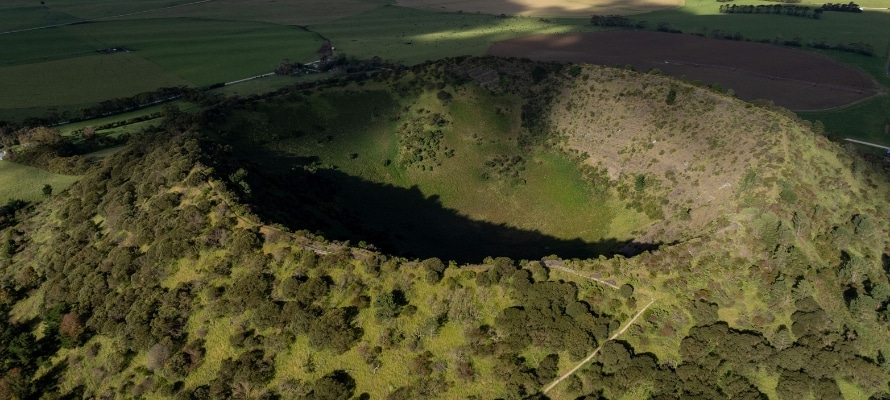
Image: Mount Schank – Tourism South Australia
Why A Motorhome Is The Best Way To Visit These Sites
Flexible daily drives
A motorhome is the ultimate way to drive around Australia and visit these sites. You are not relying on anyone else to get where you need to be or telling you where to go. You set your own pace and come and go from locations as you please. If you are someone who prefers a slower pace, then you drive at a pace that suits you. But if you are a speed demon who likes to see something new every day then you can drive from place to place and have lots of different daily experiences.
Access to remote locations
Some of these locations can be a little remote, meaning that access to accommodation can be limited. Not with a motorhome! With a motorhome as your companion on this trip your travel and accommodation are combined, meaning that no matter where you are your accommodation is sorted. This can be especially handy if you decide to spend a little longer at a particular spot.

Image: Cruisin’ 2 Berth Sandpiper
Overnight stays in nature
A lot of these locations are situated in National Parks. In Australia some National Parks offer campsites where you can stay the night and experience a whole different side of the park. It is best to do your research and find out if any of the stops on your trip have these kinds of campsites, especially as there are not only bookings usually involved, but you will need to plan around getting access to a powered campsite every second night to re-charge the in-house battery in your motorhome.
Unpack once
One of our favourite features about travelling by motorhome is that you only need to unpack once. You can take the time and settle in and put all your luggage in the ample storage included in our motorhomes. This means that no matter the length of your trip, you only need to worry about unpacking once. This is especially handy if you are planning an early start as you can sleep in a bit longer knowing that there is no last-minute rush to get packed-up before you leave.
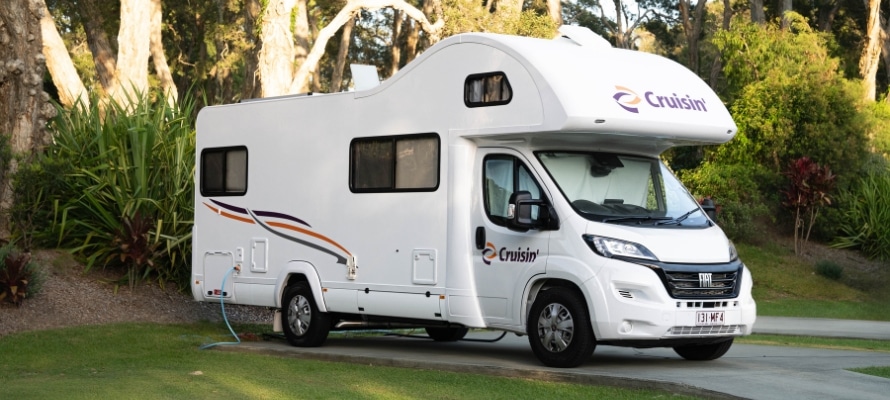
Image: Cruisin’ 6 Berth Deluxe
Plans can be changed to accommodate for weather
Australia is a vast country, and each state and territory has their own weather patterns and climate. From the tropics to the desert and everything in between, Australia has it all. Another thing about the Australian climate, is that in some places it can be quite varied and change at the last minute. If you are planning a hike or another outdoor activity, rain is not the ideal weather, and you might want to put off your hike for another day. This is easier in a motorhome, as travelling on your own timetable allows you to stay (or leave) a location when you choose, as you are not tied into an itinerary that is set in stone.
What kinds of vehicles are good for visiting volcanic landscapes
At Cruisin’ Motorhomes, we have a variety of vehicles available, from our 2-Berth Hi-Top all the way to our 6-Berth Deluxe. There is bound to be a motorhome that suits your needs. The best way to decide which one to pick it to look at what features you would like in your motorhome to help make your trip more enjoyable, and how much space you would like to have. Head on over to our website where you can look at all the different motorhomes that are in our fleet and decide on which one is best for you. Our friendly reservations team can also help you out if you give them a call on 1300 664 485.
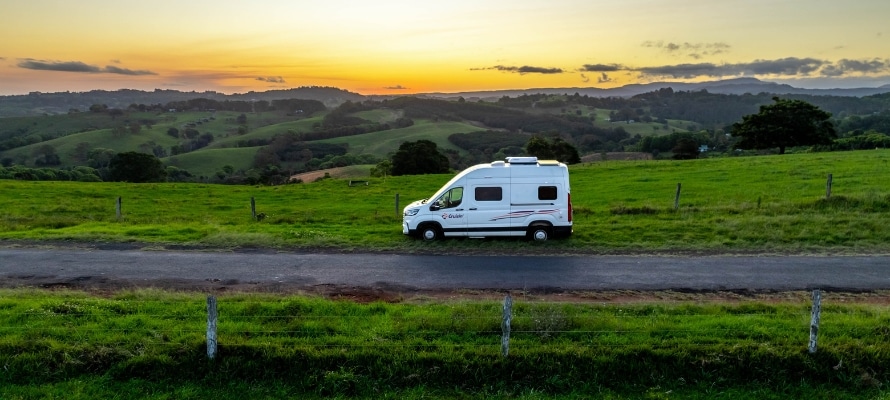
Image: Cruisin’ 2 Berth Rover
Start Planning Your Road Trip!
Hire a self-contained motorhome from Cruisin’ Motorhomes and turn your holiday into the ultimate road trip.
Call our friendly reservations team on 1300 664 485 or check out our website to see the motorhomes we have available at our branches!
✨ Need inspiration? Check out our detailed itineraries and our blog articles for our latest motorhome tips!
Follow us for daily travel inspiration! Don’t hesitate to share your Cruisin’ Motorhomes adventure with us with the #cruisinmoments!
Related Locations

3 Runway Pl, Cambridge TAS 7170, Australia

Phone Number : 1300 664 485
International : +61 3 6248 4789
42 Vauxhall Street, Virginia QLD 4014, Australia
Phone Number : 1300 664 485
International : +61 3 6248 4789
10 Wurrook Circuit, Caringbah NSW 2229, Australia
Phone Number : 1300 664 485
International : +61 3 6248 4789
25-27 Catalina Dr, Tullamarine VIC 3043, Australia